

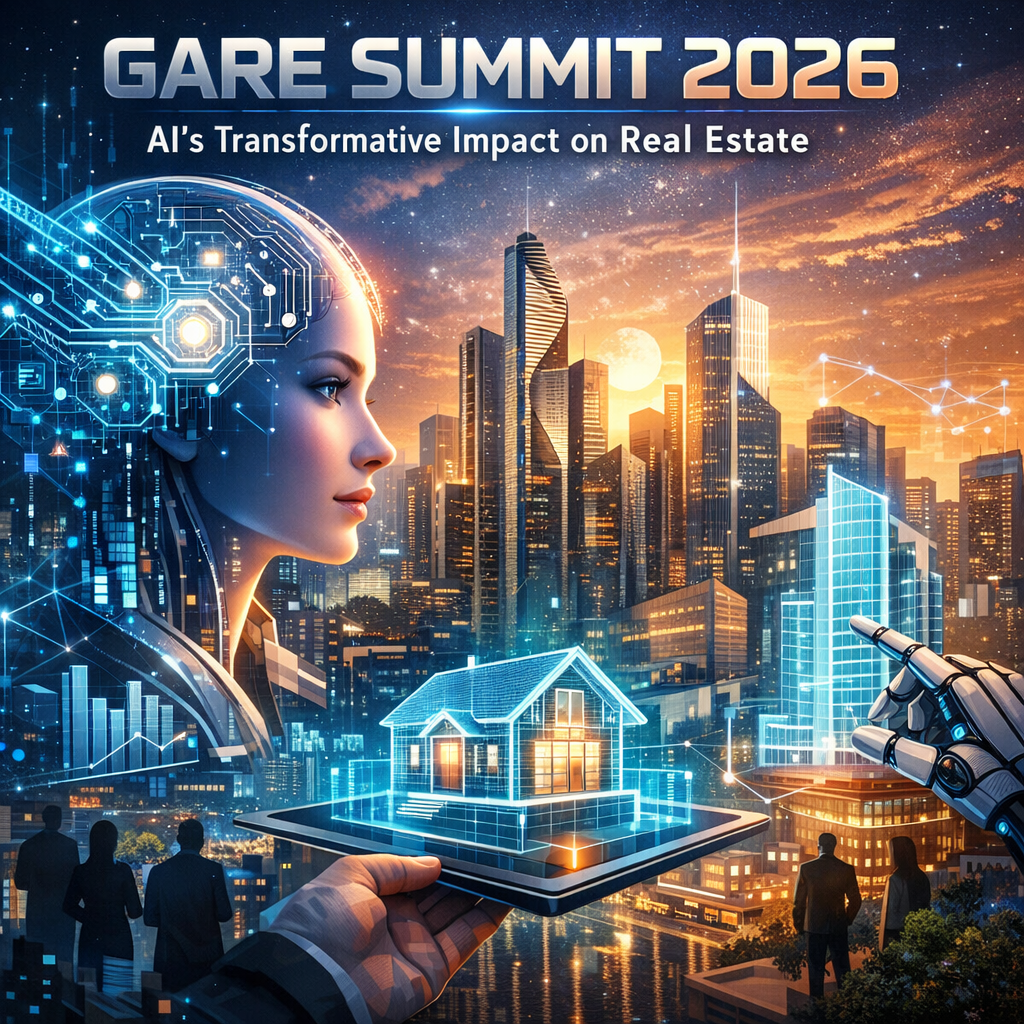
GARE Summit 2026: AI’s Transformative Impact on Real Estate
GARE Summit 2026: How AI Is Reshaping Real Estate Forever
The GARE Summit 2026 served as a monumental platform for unfolding the future of real estate, with a particular spotlight on Artificial Intelligence (AI). This convergence of technology and property has signaled a definitive shift in how industry professionals, from developers to agents, interact with the market. Here’s how AI is not just altering, but fundamentally reshaping the realm of real estate.
AI in Real Estate: More Than Just Automation
Revolutionizing Property Search and Transactions
AI-powered platforms are transforming property searches by offering more intuitive and user-friendly interfaces. These systems analyze massive datasets to suggest properties that meet very specific user preferences, greatly improving search efficiency. Moreover, AI is smoothing out transaction processes. It can predict the best times to buy or sell properties with predictive analytics and machine learning algorithms, and even automate tedious paperwork, simplifying and speeding up transactions.
Enhanced Property Valuation Models
One of the standout discussions at GARE Summit 2026 was the transformation in property valuation. AI technologies now enable more accurate and dynamic property valuations based on real-time data analytics. These models consider factors ranging from market trends, location desirability, economic shifts, local infrastructural developments, and even social media sentiment, providing a well-rounded valuation that adjusts instantaneously to market conditions.

Impact on Real Estate Professionals
Agents and Brokers
While fears of AI possibly replacing human jobs are prevalent, the reality shared at the summit suggests augmentation rather than replacement. AI tools equip real estate agents with deep insights and administrative support, allowing them to focus more on the human aspects of their jobs—like negotiating deals and building client relationships.
Developers and Investors
Real estate developers and investors are harnessing AI to analyze market trends and predict future demand more accurately. AI systems can simulate potential development outcomes or investment returns under various scenarios, enabling strategic decision-making grounded in data.
The Challenges and Ethical Considerations
Despite its benefits, integrating AI into real estate involves several challenges and ethical considerations:
-
Data Privacy and Security: With the real estate sector becoming increasingly digital, concerns about data theft and privacy breaches have magnified. Ensuring robust security measures and ethical data usage is paramount.
-
Bias in AI Algorithms: AI systems are only as good as the data they are trained on. Biased data can lead to skewed AI decisions, affecting fairness in property valuations, lending, and other real estate services.
-
Regulatory Compliance: As AI becomes more ingrained in real estate, ensuring these systems comply with existing and new regulations is crucial. The legal landscape must evolve to address the unique challenges presented by AI technologies.
Looking Forward: The Future of AI in Real Estate
The future trajectory of AI in real estate looks promising yet requires vigilant navigation. Continued advancements are expected to further automate processes, enhance accuracy in various operations, and provide greater insights into market dynamics.
In conclusion, the insights from GARE Summit 2026 confirm that AI is not just a temporary influence but a cornerstone of the future real estate landscape. For professionals in the sector, embracing these changes and adapting to the new tech-driven environment will be key to success. For consumers, AI promises a more tailored, efficient, and transparent real estate journey. As we look towards the future, the intersection of AI and real estate continues to offer exciting possibilities for transformation and growth.
Overall, the integration of AI in real estate is reshaping the industry fundamentally, influencing every aspect from operational efficiencies to strategic decision making. As we continue to navigate this evolving landscape, the potential for innovative solutions and improved consumer experiences seems limitless. Stay tuned to see how AI will continue to transform the real estate sector in ways we can only begin to imagine.